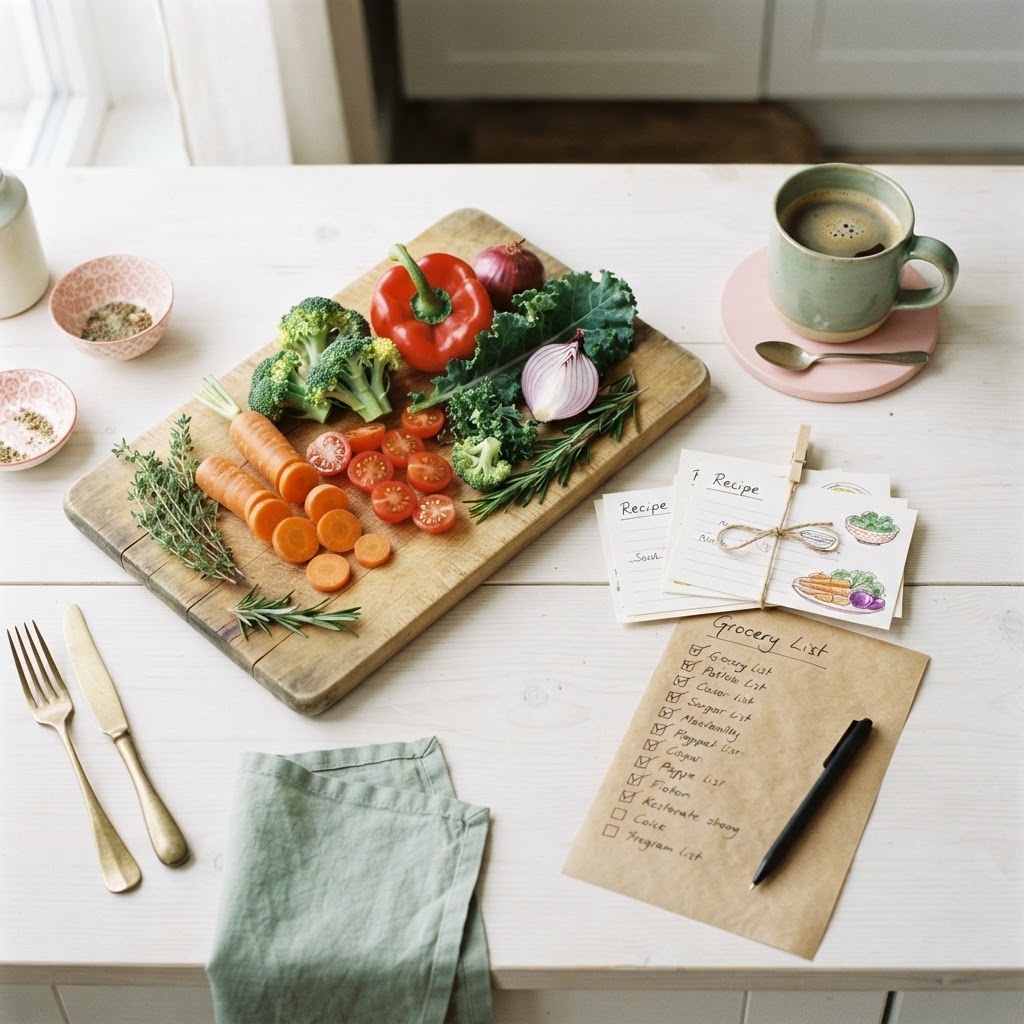
How to Feed a Family of 4 on a Budget: Meal Planning That Actually Works
If you have stood in the grocery store aisle recently, looked at the total on the register screen, and thought there is no way I spent this much last year, you are not imagining it.
Grocery prices have climbed. And if you are feeding a family of four, that weekly number can feel like a second mortgage.
But here is the thing nobody tells you: the biggest waste in most family food budgets is not what you buy. It is what you throw away. And what you throw away is almost always a planning problem.
I cut our grocery bill by nearly a third without cutting quality, without eating ramen, and without spending my Sunday meal prepping for five hours. Here is exactly how.
Why Most Families Overspend on Groceries
It is not because you are buying fancy cheese or organic everything. It is usually one of three things:
- No plan means multiple trips. You go to the store three times a week instead of once. Each trip adds $20 to $40 of impulse buys.
- Duplicate ingredients. You buy cilantro on Monday, forget you have it, buy more on Wednesday. The first bunch wilts in the back of the fridge.
- Takeout rescue meals. When dinner is not planned and 5 PM hits, the drive-through wins. That is $30 to $50 you did not budget for, every single time it happens.
The fix for all three is the same: a plan. Not a rigid, color-coded, three-hour plan. Just a simple weekly framework.
The 5-Step Budget Meal Planning System
Step 1: Set a Realistic Number
Before you plan a single meal, know your number. What can you actually spend this week?
For a family of four, the USDA moderate-cost plan puts weekly groceries around $250 to $300. But plenty of families eat well on $150 to $200. The number is less important than the commitment to it.
Write it down. That is your ceiling.
Step 2: Shop Your Pantry First
Before you build your meal plan, look at what you already have. Open the freezer. Check the pantry. Look in the back of the fridge.
You would be shocked how many meals are hiding in your kitchen already. That bag of frozen chicken, the rice you forgot about, the half-used jar of pasta sauce. Build two or three dinners around what you already own, and you just saved $30 to $50 without leaving the house.
Step 3: Build a Flexible Weekly Plan
Here is where most budget meal plans fail: they are too rigid. Life happens. Wednesday gets crazy. Thursday you are exhausted.
Instead of assigning specific meals to specific days, plan five dinners for the week and pick the night-of based on your energy level.
A good weekly framework looks like this:
- Two protein-forward meals (chicken, fish, pork)
- One pasta or grain bowl (cheap, filling, stretches ingredients)
- One soup or stew (uses pantry staples, makes leftovers)
- One fun meal (taco night, homemade pizza, breakfast for dinner)
Five meals. One grocery trip. Zero panic.
Step 4: Cross-Use Ingredients
This is the secret weapon. When you plan meals that share ingredients, you buy less, waste less, and save more.
Example: a bag of spinach goes into Monday's pasta, Wednesday's soup, and Thursday's smoothies. One bell pepper gets split between Tuesday's tacos and Friday's sheet pan. A rotisserie chicken becomes dinner Monday, lunch Tuesday, and soup base Wednesday.
This is not about eating the same thing every day. It is about being smart with what you buy so nothing dies in the crisper drawer.
Step 5: Track and Adjust
After two weeks of this system, look at your grocery receipts. What did you actually spend? What got thrown away? What surprised you?
Adjust from there. The goal is not perfection on week one. It is a system that gets sharper every week.
How Petal Kitchen Makes Budget Meal Planning Effortless
I used to do all of this manually. Sticky notes, grocery lists on my phone, cross-referencing recipes to check ingredient overlap. It worked, but it took 45 minutes every Sunday.
Now Petal Kitchen does it in five.
Meal Plan Bestie lets you set your weekly budget, number of people, dietary needs, and preferred cuisines. It builds the entire week for you, generates the grocery list, and cross-uses ingredients automatically. You literally tell it your number and it plans around it.
Quick Dinners saves you on the nights the plan falls apart. Tell it what you have in the pantry and it finds a real recipe you can make right now. No takeout. No waste.
Kids Safe Foods means you are not buying separate ingredients for a kid meal and an adult meal. One grocery list, one dinner, everyone eats.
That is the whole point. Budget meal planning is not about deprivation. It is about having a system that makes the smart choice the easy one.
What This Actually Looks Like in Real Life
Last week, our grocery total for a family of four was $168. Five dinners, plus leftovers for lunch. No coupons. No extreme strategies. Just a plan.
Monday was lemon herb chicken with roasted potatoes. Tuesday was black bean tacos with all the fixings. Wednesday was a big pot of vegetable soup that fed us again Thursday. Friday was sheet pan sausage and peppers. Saturday was homemade pizza night.
Total active cooking time: maybe 90 minutes across the whole week. Total waste: almost nothing. Total stress: zero, because I knew what was for dinner before the week started.
The Bottom Line
You do not need to be a coupon queen. You do not need to eat beans and rice every night. You just need a plan that works with your real life and your real budget.
Start free at petal-kitchen.com and let Meal Plan Bestie build your week around your number. And for more family dinner inspiration, recipes, and kitchen tips, visit velvet-spoon-bites.com.
Your grocery bill will thank you. So will your 5 PM self.